Pay transparency
EU pay gap report and pay requests from your existing data
Directive (EU) 2023/970 gives every worker the right to ask for their pay level and the average pay of women and men doing work of equal value. Malta put it into law with L.N. 173 of 2026: a request needs a written answer within eight days. Companies with 150 or more workers file their first gap report by 7 June 2027.
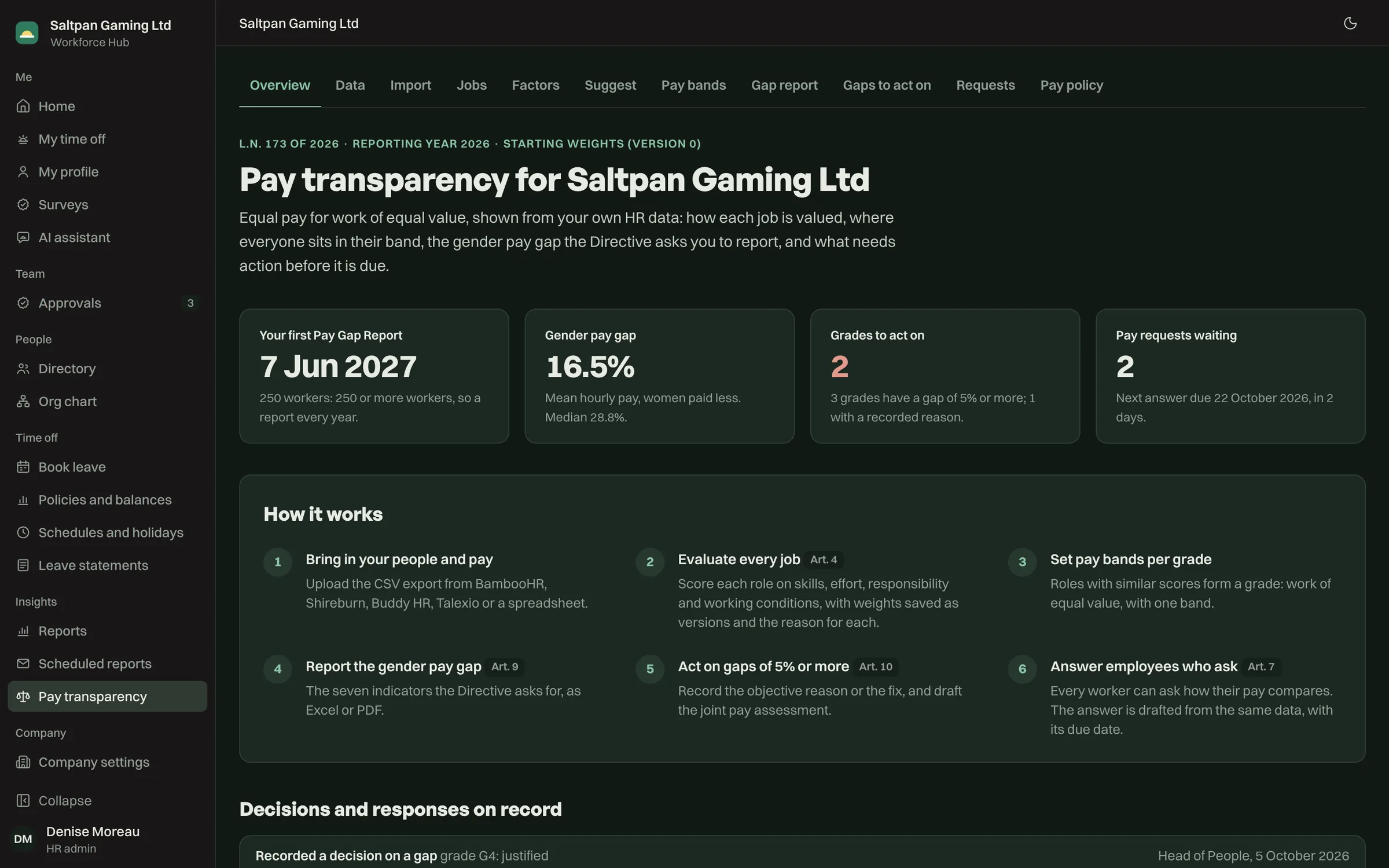

to answer a pay request in Malta, under regulation 6(2) of L.N. 173 of 2026
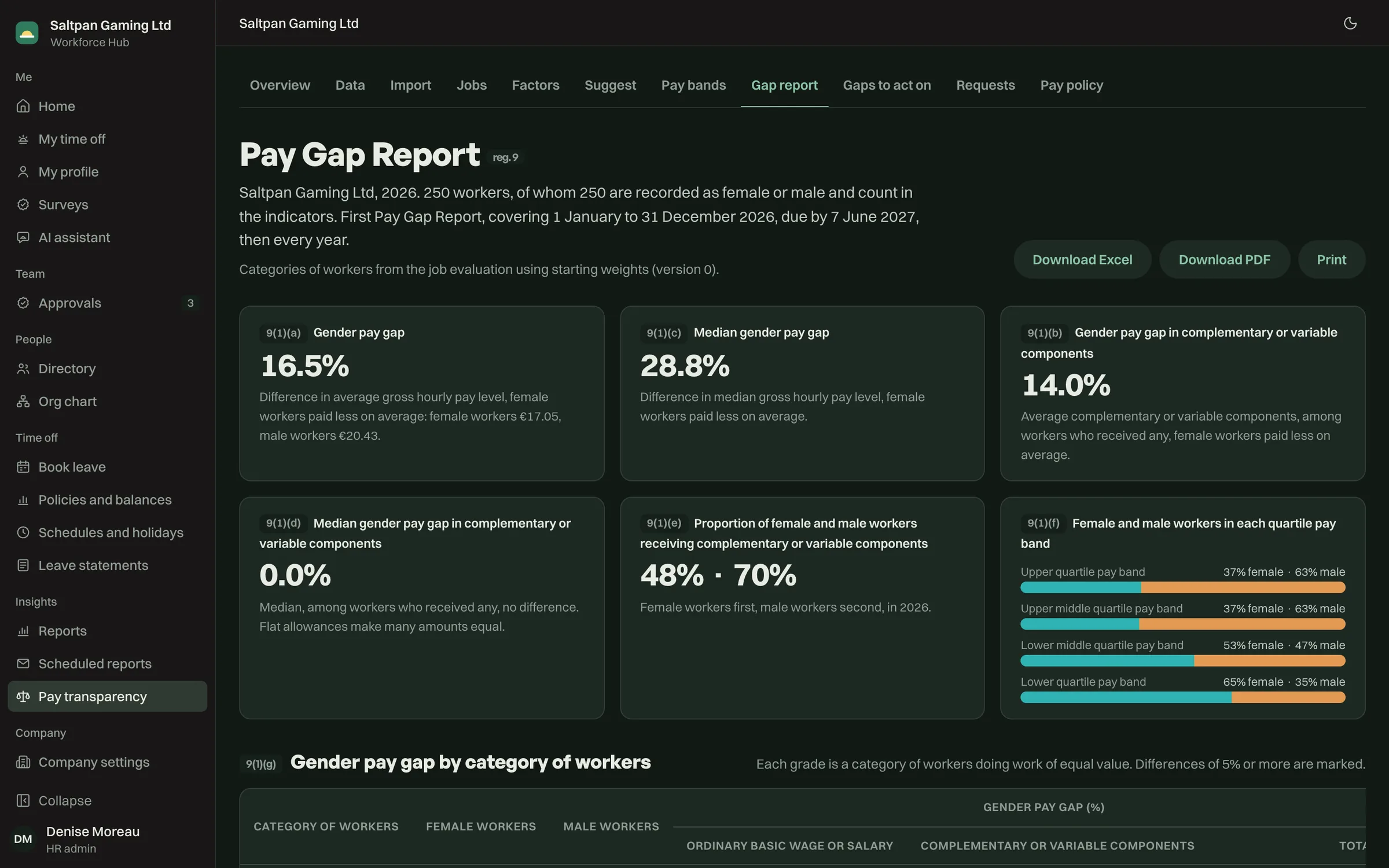
in the gap report, (a) to (g) of Article 9, worked out for you
or more in a grade is flagged, with six months to justify or close it
Gap report with all seven indicators
Mean and median gaps, the gaps in bonuses and allowances, who receives them, the quartile bands and the gap in each category of workers. Part-time pay is put on a full-time basis first. Download it as Excel or PDF for the monitoring body.
- Indicators (a) to (g) of Article 9
- Reporting dates set by your headcount
- A warning wherever a group is small enough to reveal one person's pay
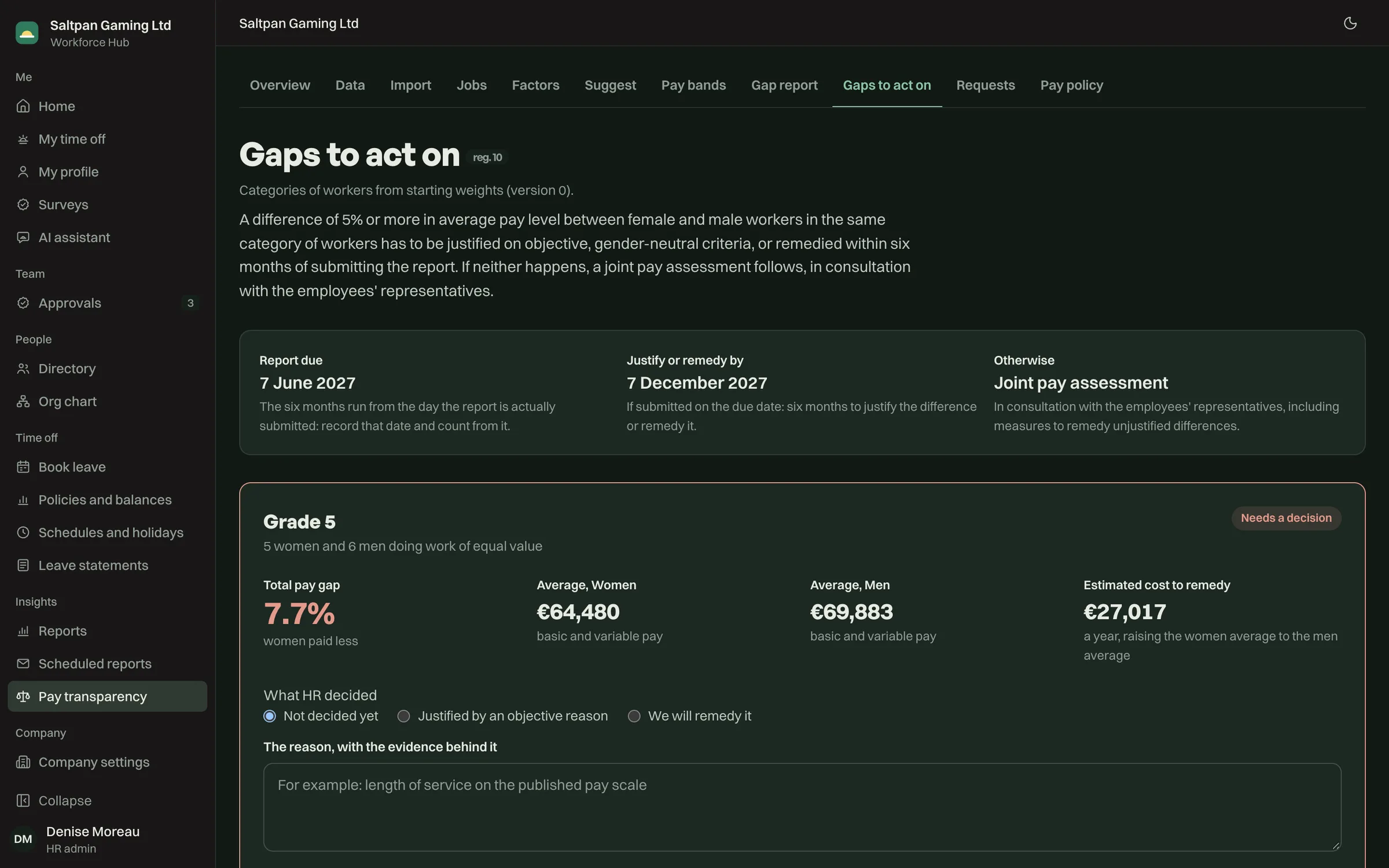
Gaps of 5% or more flagged by grade
Any grade where women and men are paid 5% or more apart is flagged. HR records whether the gap is justified by an objective reason or being closed, and the joint pay assessment is drafted from that decision.
- The six-month date to justify or close each gap
- The joint pay assessment drafted per grade
- Every decision in the activity log, with who and when
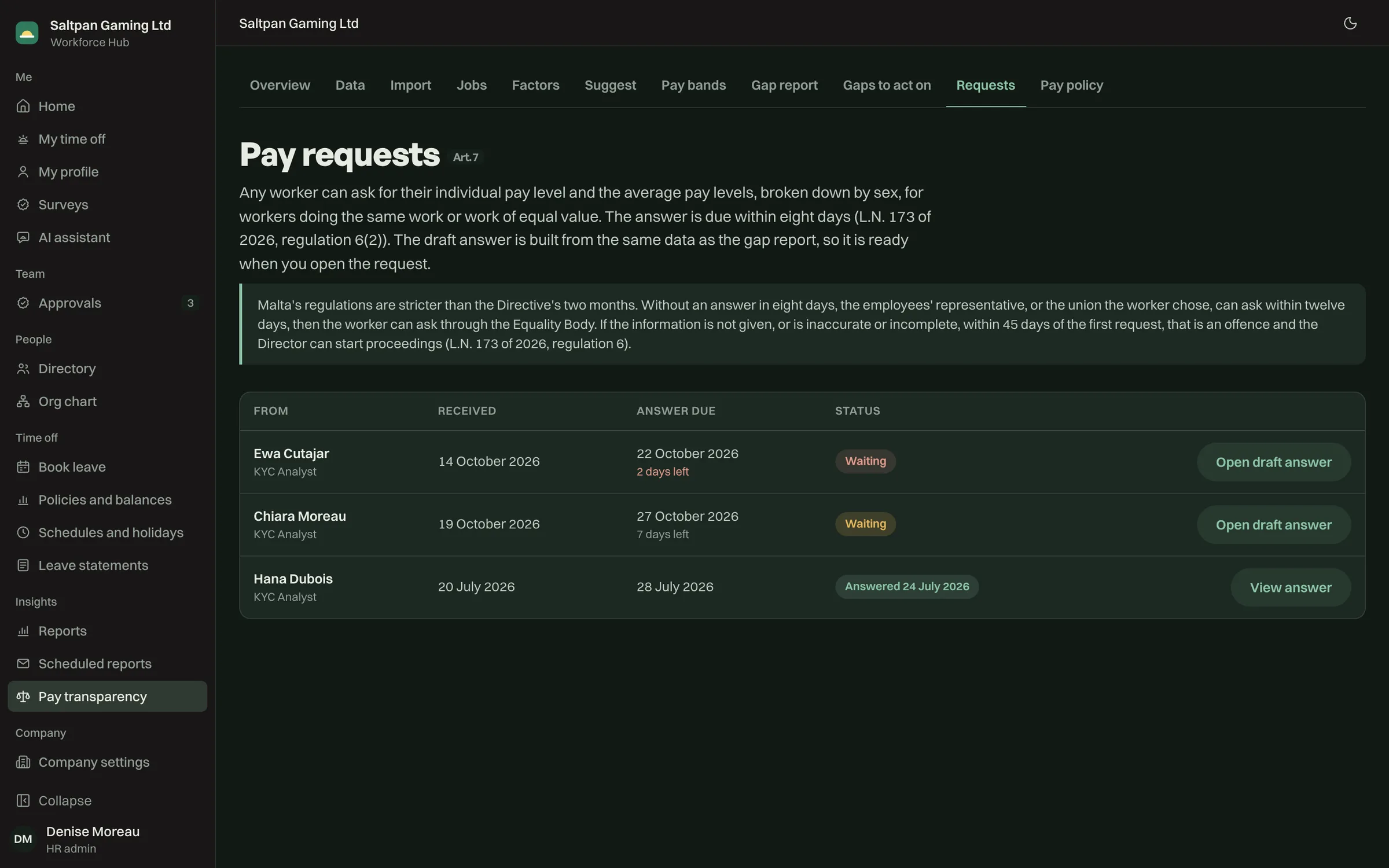
Pay requests with drafted answers
Log a request and the due date follows the company's law: eight days in Malta, two months under the Directive. The answer is drafted from the same figures as the gap report, so it's ready to check when you open it.
- The person's pay and the averages for women and men in their grade
- Yearly and hourly, on a full-time basis
- Drafted by fixed rules from your data, with no model involved
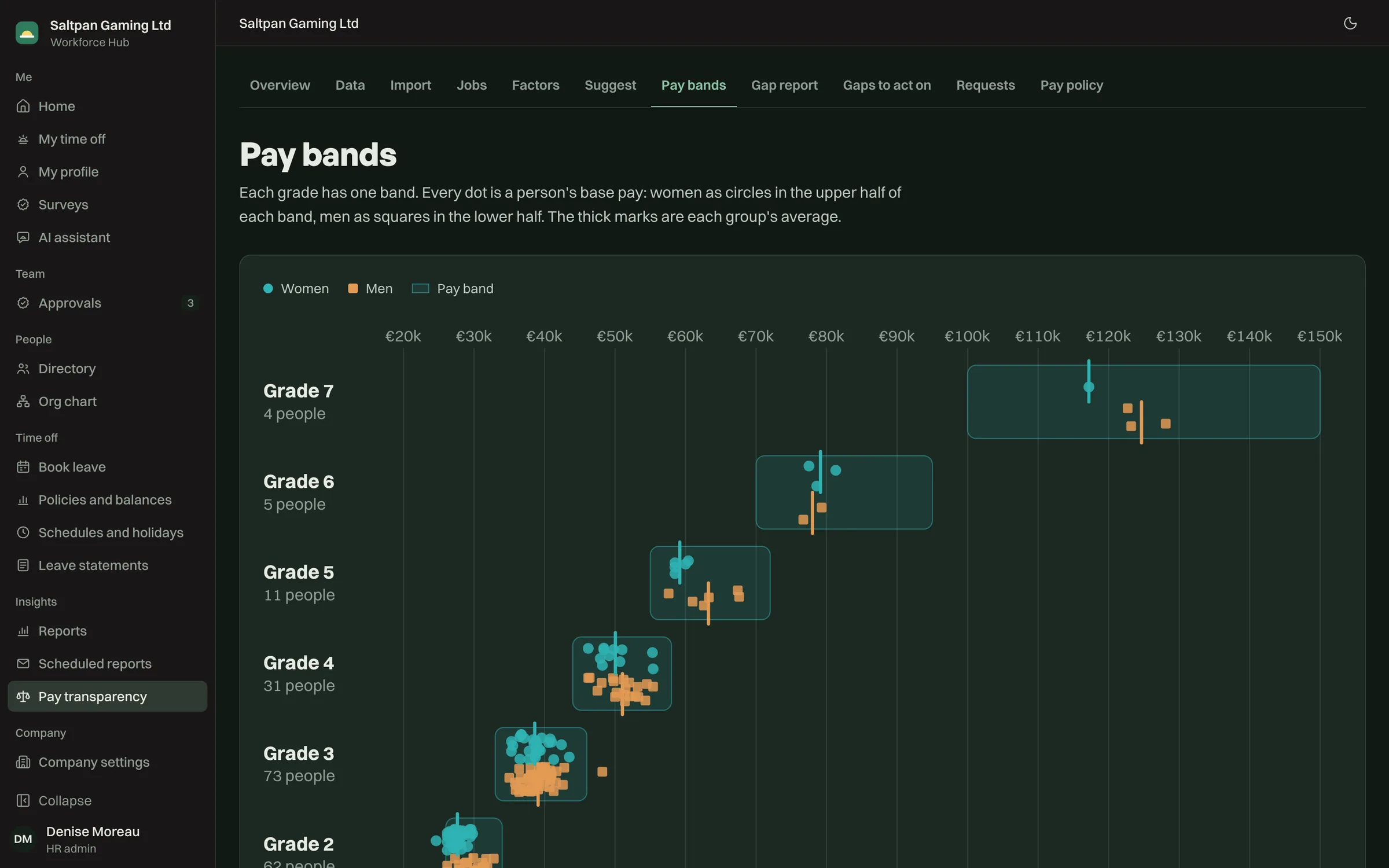
Pay bands from job evaluation
Each role is scored on the four factors the Directive names: skills, effort, responsibility and working conditions. Roles in the same grade count as work of equal value across departments, and each grade has one pay band.
- Weighted factor scores for every role
- Everyone's base pay plotted against their band
- People outside their band listed for review
Questions
When do we have to report?
Companies with 250 or more workers report by 7 June 2027 and then every year. From 150 to 249, by 7 June 2027 and then every three years. From 100 to 149, by 7 June 2031 and then every three years. Below 100, reporting is voluntary.
Is a model used to write the answers?
No. Answers to pay requests and the joint pay assessment are drafted by fixed rules from the gap report, so each line can be traced to a figure.
Other modules
Every part works from the same records, and one price per employee covers them all.
- PeopleOne record per person, with job and pay changes that apply on the day they take effect.
- Time offLeave counted in hours against each person's schedule, and approved from the manager's phone.
- Org chartDrawn from the records, so it changes when someone joins, moves or leaves.
- ReportsPeople and time-off reports, a full Excel export, and every change in an audit log.
- AssistantsClaude, ChatGPT and Cursor connect over MCP, with the app's permissions, once HR turns it on.
Your first 3 employees are free
Tell us about your company. We set it up on your domain with your public holidays and leave policies, and your team books its first leave the same day.